


Vermilion Parish Rice Farmers Explore Microalgae as “Weird but Promising” Crop
March 16, 2026
Helping Farmers Grow Food, But Also Medicines
In the heart of Cajun country, Allen Mclain farms about 3,000 acres of rice together with his wife, father, and two younger brothers. Much of their crop, all south of LA-14, is under threat. Saltwater from the Gulf is slowly, and some days quickly, making its way up through marshes, bayous, and over levees.
“Salt is killing Louisiana rice,” Mclain said. “But if you jump to a different commodity, you’re changing an ecosystem we’ve known for hundreds of years. Then you’re changing the bird patterns, you’re changing the fish habits, you’re doing a lot of things that can hurt the whole geographic area. Meanwhile, rice yields are down, and rice prices are as low as they’ve been in 30 years. Rice farmers are struggling very much right now while our input costs are four times higher.”
LSU researcher Naohiro Kato planted an unconventional idea with Mclain—supplement his family’s income from rice by also growing microalgae, which thrives in saltwater. Kato’s team is studying how a bright red compound derived from microalgae, fucoxanthinol, can be used as a potential treatment for asthma and obesity. While most Louisiana farmers sell their rice at under $1 per pound, a single pound of fucoxanthinol for medical use could fetch about $1 million.
“At first, I thought, ‘Man, this is weird!’—and I don’t even try to pronounce it,” Mclain said. “But I think algae is going to be a huge benefit. To produce it, we can use less fertilizer and zero pesticides and there is no waste.”
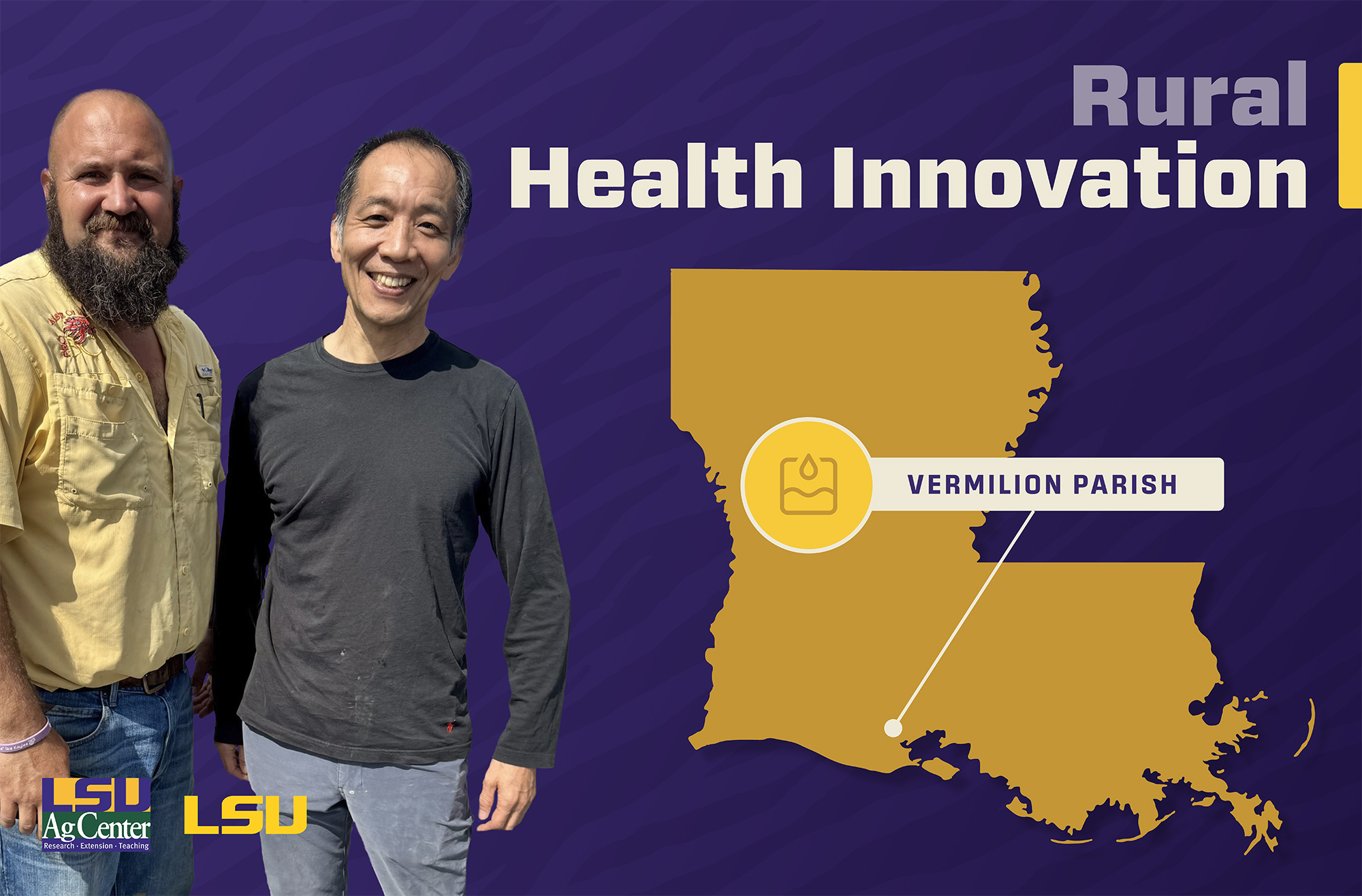
After testing the water on Allen Mclain’s farm, LSU researcher Naohiro Kato is working to isolate local strains of microalgae that could be farmed at a grand scale alongside rice. “We constantly have land lost to salt, while microalgae like salt and could help us rice farmers make it to the next season,” Mclain said.
“All the FDA-approved medications for obesity work by decreasing food intake, while fucoxanthinol [from microalgae] could be used to increase metabolic rate. We’re now looking at an initial clinical trial with Dr. Kato at LSU. Fucoxanthinol has already been shown to have anti-cancer activity in breast, colon, leukemia, and bone cancer cells. It has been shown to reduce the inflammation that occurs in Alzheimer’s and Parkinson’s diseases. It also helps the liver by reducing the scar tissue that builds up in cirrhosis, and makes the body more sensitive to insulin, suggesting it also could be a good treatment for diabetes.”
Dr. Frank Greenway, chief medical officer for Pennington Biomedical’s Clinical Trials Unit